
Reviewed · LAPLAND
Arctic Fishing & Open Fire Cooking
If you want Lapland that feels real, not staged, this is a half-day built around ice fishing and finishing with open fire cooking. Inari and Ivalo are already dramatic in winter, but what makes this one memorable is that you learn the work first, then you eat the result. Guides such as Sonja, Juhanni, Ossi, and Jennifer are known for keeping things calm, hands-on, and genuinely friendly.
I love two parts most: the traditional ice technique you practice, and the moment you’re warming up with a bowl of fresh fish soup cooked after you’ve caught your share. There’s also dessert cooked over open fire, which turns the whole meal into a win even if you spent the morning focused on not dropping your gear.
One thing to consider is that this experience runs in winter conditions and it depends on good weather. Also, transfers are included from Ivalo and back, but if you’re staying somewhere else (like Nellim, Kiilopää, or Saariselkä), you may need a supplementary transfer.
Key highlights worth your attention
- Small group size up to 8 travelers, so you get real time with the guide on the ice
- Thick-ice drilling and classic ice fishing techniques, not just a quick photo stop
- Net checks under the ice and help identifying local fish like white fish, pike, perch, and burbot
- Lappish Tipi Tent cooking with an open fire meal you can truly connect to your catch
- Arctic marine life chat while you prep and cook, so it feels educational without being stuffy
- Optional tent sauna or ice swimming if you want to push the day further
What this Arctic ice fishing day is really about
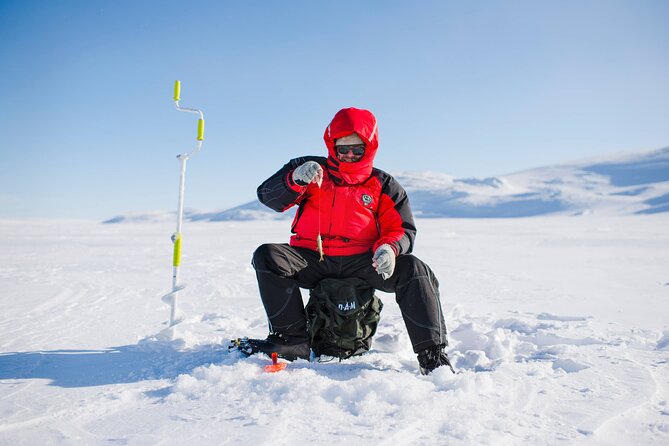
This trip is built around two ideas that work especially well in Lapland. First, you do the work yourself: drilling through ice, setting up for fishing, and handling the catch. Second, you turn that work into warmth and comfort: soup, hot food, and cooking over fire in a tipi.
That combination matters. A lot of winter activities stop at seeing snow and taking photos. Here, you get a skill, you get context, and then you get to eat something that feels earned. If you’re the type who likes nature experiences with a clear purpose, this one clicks fast.
You’ll also see that the guides treat the day like a craft. From gear fitting to teaching technique, it’s not rushed. That showed up in multiple accounts of the guides being patient and good at the practical stuff, plus being thoughtful about Sami culture when it comes up.
More Lappish cooking classes in Lapland:
- Lappish Cooking Master Class
★ 5.0 · 8 reviews
Meeting point, timing, and how to not feel rushed
The day starts at Xwander Nordic, at Ivalontie 12 in Inari. You should plan to arrive by about 9:45 AM for setup. The official start time listed is 10:00 AM, and the whole experience runs about 5 hours, with your return around 3:00 to 4:00 PM.
Transfers are included from Ivalo and back, which is a big help if you’re using Ivalo as your base. If you’re staying in other nearby places, the day may still work, but supplementary transfers may be needed. The practical takeaway: confirm how you’re getting to Xwander Nordic, especially if your hotel is not in Ivalo.
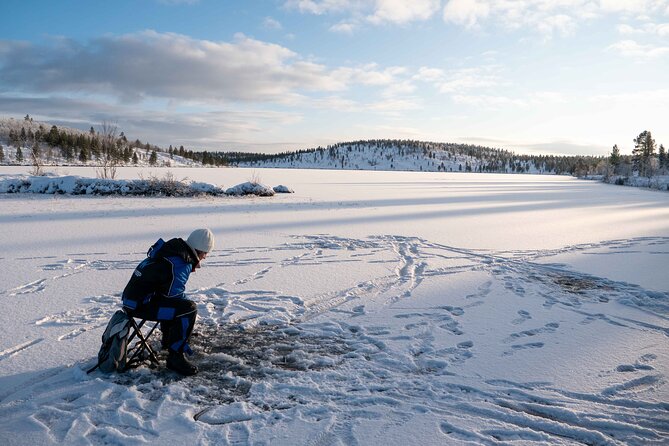
Group size is kept small, with a maximum of 8 travelers. That affects the experience more than you might think. On a frozen lake, there’s only so much space and so many tools. Smaller groups mean more attention from the guide and less waiting around while you hope the ice is cooperative.
Getting geared up for the cold: boots and overalls
You’ll be provided with overalls and boots, which is one of the best value add-ons of the entire day. When you’re drilling through ice and standing outside longer than you expect, your comfort matters more than almost anything else.
In winter fishing, the biggest enemy is not the cold alone, it’s being cold while you’re still. A good gear setup helps you move, bend, and handle gear without your hands and legs going numb too fast. If you wear layers, great. If you don’t, you still have the basics here, but you’ll likely want warm base layers under the provided suit so you can stay comfortable through the whole arc of the day.
Service animals are allowed, and the meeting point is near public transportation. So if you’re not traveling with a car, you’re not stuck.
Stop 1, Ivalo: the warm-up before you hit the lake
The day is organized with a start in Ivalo, then you head toward Lake Inari for the fishing. Ivalo is less about the activity itself and more about the staging. This is where the guide usually handles the first critical steps: fitting gear, reviewing how the day works, and making sure you understand what you’ll do on the ice.
This first segment is also a good chance to ask questions. Want to know what kind of fish are most likely? Wonder how long drilling takes? This is when you’ll get straight answers without feeling like you’re interrupting while someone is teaching on the ice.
The practical benefit of a structured start is that it reduces stress. Ice fishing has a learning curve, and Lapland weather doesn’t pause for learning. The calmer the setup is, the more you enjoy the actual lake time.
Same stretch of Lapland, a different kind of day:
- Guided Ice Climbing Activity in Pyhä
★ 5.0 · 149 reviews - Northern Lights Auroras from Kemi-Tornio with Pickup
★ 4.5 · 44 reviews - Husky safari
★ 4.0 · 24 reviews - Classic Wilderness Skiing in the Pyhä-Luosto National Park
★ 5.0 · 23 reviews
Stop 2, Lake Inari: drilling through thick ice and learning the real technique
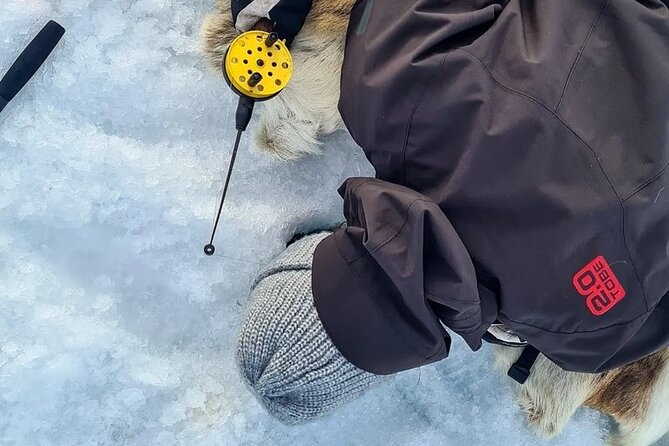
Once you’re on Lake Inari, the core of the experience begins. You’ll learn traditional ice fishing techniques, including drilling through thick ice. That part is physical, and that’s why it feels so satisfying. You’re not just watching. You’re participating in a process that locals have used for generations.
Here’s what makes it worth doing even if you’re not a serious angler. You’ll see how the guide reads the situation, handles equipment, and sets up so you’re fishing safely and efficiently. The technique also helps you understand what you’re doing when you check what’s happening under the ice.
A small but important point: thick ice drilling takes time and effort. Even if you’re not strong, you can still participate. The experience is designed so most people can join, but you should come ready for cold, effort, and standing around while the fishing plan unfolds.
Checking submerged nets and spotting local fish species
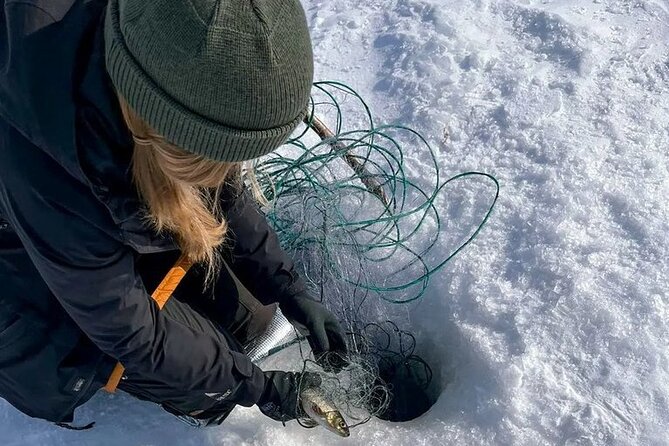
Ice fishing in this region isn’t just about casting and hoping. You’ll check submerged nets and learn how to discover fish species found locally. The tour mentions species you might see and learn about, including white fish, pike, perch, and burbot.
Even when your catch is smaller than your imagination, the learning sticks. Knowing how these fish fit into the local ecosystem makes the whole experience more meaningful. And you also get some education about Arctic marine life, which helps connect the dots between the cold work you’re doing and the living world beneath the ice.
One practical tip if you care about the science side: don’t be shy about asking what the guide thinks you’re seeing. Many guides can explain the differences in behavior and what conditions might influence results.
Preparing the catch: where the day turns from cold work to food
After fishing comes the step that changes your mood fast. You’ll prepare the catch while learning about the setting you’re in and the fish you’ve been catching. This is the moment when the experience shifts from outdoors endurance to cozy competence.
If you’re squeamish about fish prep, the best approach is to treat it like a guided lesson. You’re learning how to handle the catch properly, and you’re doing it with warm food in mind. You don’t have to become a chef. You just need to follow instructions and stay attentive.
This part also matters for value. If a tour’s “cooking” is only heating something pre-made, it feels separate from the fishing. Here, your catch is part of the meal story.
Lappish Tipi Tent and open fire cooking: fish soup and dessert
Then you hit the warm part: cooking and eating in a Lappish Tipi Tent. This is where the open fire cooking becomes the signature of the day. You’ll cook and enjoy a warm fish soup, plus dessert cooked over open fire.
Why I think this is a great format: a tipi tent is not only a shelter, it changes your attention. You stop thinking about the cold for a minute and start focusing on the meal. The smell of fire and fish, plus the warmth of the tent, makes the whole morning feel worth it.
The soup is simple in the best way. It’s warming, filling, and a natural match to the kind of fish you can catch on the lake. Even people who struggle to get excited about fishing often appreciate this part, because you can taste the process.
Also, a good meal at the right time is a major safety and comfort factor in winter. Staying warm helps you enjoy the return trip instead of feeling wiped out.
Optional add-ons: tent sauna and ice swimming
If you want to turn the day into a full-on winter story, there are optional add-ons: tent sauna and ice swimming.
These aren’t described in detail, so I’ll be honest about how to think about them. Tent sauna usually pairs well with ice fishing because it helps your body recover, and it can make the cold feel like a challenge you overcame. Ice swimming is more intense, and it’s the type of thing you should only do if you’re comfortable with sudden cold exposure and you follow instructions closely.
If you’re on the fence, the smart move is to book the base tour and then decide day-of based on how you feel. Your comfort level matters more than bragging rights.
Guides you’ll remember: hands-on teaching with a human touch
The guides are one of the strongest reasons to choose this operator. Multiple accounts highlight guides like Sonja, Juhanni, Ossi, and Jennifer as organized, patient, and skilled at both the fishing and the cooking.
There’s also a cultural and conversational side that comes through in reviews. Guides were praised for being very good about Sami culture, and that matters. It turns the tour from a technical exercise into something with context. When someone can explain what you’re seeing and why it matters, you remember the day longer.
Small group size makes these traits easier to deliver. You’re not lost in a crowd. You get real coaching and real interaction.
Price and value: what $188.09 buys you in real terms
At $188.09 per person, this is not a bargain-basement activity. But in Lapland winter conditions, it also isn’t overpriced for what you actually get.
Here’s what your money covers:
- Guide services
- Fishing equipment
- Food and drinks
- Transfers from Ivalo and back
Then there are the less visible values. Someone else handles the logistics, safety setup, and the rhythm of the day. You don’t need to rent gear or figure out how to do ice fishing yourself. And you get a full experience package: fishing, learning, and a warm open-fire meal in a tipi.
If you were to DIY it, the cost gap would likely narrow once you add equipment, a local guide for safe ice fishing setup, and transportation. For many people, the biggest value is time saved and stress avoided.
My practical take: this price makes sense if you want the whole arc, not just a taste. If your goal is pure photos and minimal effort, you might prefer a different winter activity. If your goal is hands-on cold work plus a meal you helped create, this is good value.
What you should bring, and what you can relax about
You’ll get overalls and boots, which lowers the packing burden. Still, you’ll want to be ready for winter. Since the tour data doesn’t list specific clothing requirements, I’ll keep this grounded: plan to dress in warm layers and bring your own warm socks and gloves if you have them.
A few practical reminders:
- Keep phone use minimal. Cold drains batteries quickly.
- Expect some standing and waiting while fishing and cooking happen.
- If you’re sensitive to cold, prepare to manage it actively, not passively.
If you have service animals, the tour allows them, which is helpful if you travel with one.
Is this the right tour for you?
This experience suits you best if you:
- Want to do ice fishing as a guided lesson, not just watch
- Like winter activities that end with a hot meal
- Enjoy small groups and personal attention
- Appreciate learning about local fish and Arctic marine life
- Are open to Sami culture being part of the conversation
It may feel less ideal if you:
- Dislike physical cold work like drilling through thick ice
- Are not comfortable with winter weather dependency
- Want a purely passive experience where you never handle gear
Should you book Arctic Fishing and Open Fire Cooking with Xwander Nordic?
If you’re deciding between “see Lapland” and “experience Lapland,” I’d lean toward booking this. The combination of ice drilling lessons, net checking for local fish, and a warm tipi meal cooked over open fire makes this one of the more complete half-day winter activities in the Ivalo and Inari area.
Book it if you want your day to feel practical and memorable, with guides who are known for being patient and skilled, and with a small-group setup that keeps the focus on you. Skip or reconsider if your priority is comfort only, since weather and cold are part of the deal here.
If you go, arrive early, dress for real winter, and treat the meal like the payoff it is. You’ll likely remember the warmth of that tipi long after the lake work fades.
FAQ
How long is the Arctic Fishing and Open Fire Cooking experience?
It lasts about 5 hours, with a return between 3:00 and 4:00 PM.
What is included in the price of $188.09 per person?
The tour includes guide services, fishing equipment, food and drinks, plus transfers from Ivalo and back.
What does the schedule look like?
You should arrive at Xwander Nordic by around 9:45 AM. The start time is 10:00 AM, and the activity ends back at the meeting point between 3:00 and 4:00 PM.
Are transfers included from places besides Ivalo?
Transfers from Ivalo and back are included. Supplementary transfers may be needed if you are staying in Inari, Nellim, Kakslauttanen, Kiilopää, or Saariselkä.
Is the tour offered in English and how big is the group?
Yes, it’s offered in English. The maximum group size is 8 travelers.
What happens if weather is poor?
This experience requires good weather. If it’s canceled due to poor weather, you’ll be offered a different date or a full refund.
Can I cancel for a full refund?
You can cancel up to 24 hours in advance for a full refund. If you cancel less than 24 hours before the experience’s start time, the amount paid is not refunded.
Recently added around Lapland
- Winter Trek★ 5.0 · 3 reviews
- Private Snowshoeing Tour In Pyhätunturi With A Local Guide★ 5.0 · 3 reviews
- Snowmobile Safari in the Forest★ 4.5 · 3 reviews
- Reindeer Antler Workshop★ 5.0 · 7 reviews
- Premium Snowshoeing in Pyhä-Luosto National Park★ 4.5 · 6 reviews
- Premium Wilderness Skiing in Pyhä-Luosto National Park★ 5.0 · 4 reviews
- Scenic Snowshoeing on the Top of Pyhä Fell★ 5.0 · 10 reviews
- Icetrek to Old Kemi★ 5.0 · 7 reviews